Why I Started Chasing Dexter
An age-old question sits at the heart of aging: do we prioritise length of life, or quality of life? Is that choice even necessary? Emerging science suggests both are simultaneously compatible.
What Chasing Dexter Is – And Isn't


My name is Alan Vertue. I live with my wife, Opor, and best mate, Ringo, on the Gold Coast in Queensland, Australia. I was born in June, 1951 (I’ll let you do the math), and at this stage of life, questions around healthspan, resilience, and ageing well are no longer abstract. They’re immediate, personal, and worth examining carefully — without hype, shortcuts, or false certainty.
Science, particularly in fields like ageing, metabolism, and longevity, is moving quickly. New tools, new data, and new ways of thinking are constantly reshaping what we thought we knew. For that reason, I try to remain open-minded and sceptical in equal measure. I’m wary of dogma, cautious of certainty, and far more interested in probability than promises. Change — often accelerating change — is the only true constant.
I am not a medical practitioner, nor do I work within the medical field. I am, however, an avid and long-standing reader of health, ageing, and longevity research — particularly primary studies, reviews, and the evolving debates that surround them.
My interest in these questions is grounded in long-term self-education across science, health, and ageing research, combined with a profession spent communicating ideas clearly. Now retired, I enjoyed a long career as a professional fashion, advertising, and corporate photographer, including significant time as Photographic Director at an international advertising agency. That background shapes how I approach problem-solving, storytelling, and separating signal from noise.
In Chasing Dexter, I don’t present myself as an expert or authority. I see myself as a conduit — a translator and interpreter. Someone who takes complex, often fragmented scientific research and turns it into practical understanding you can reflect on, question, and decide how to apply in your own life.
I’m especially sceptical of one-size-fits-all health advice. Each of us has a unique physiology, shaped by genetics, environment, and life history. What works well for one person may be ineffective — or even counterproductive — for another. Chasing Dexter exists to explore these nuances, not to flatten them.
This project is rooted in curiosity rather than surety. Ideas are explored thoughtfully and, where appropriate, reflected on personally — not as proof, but as a way of understanding them more deeply. No medical advice, protocols, or guarantees are offered here — only context, perspective, and questions worth asking.
At its heart, Chasing Dexter isn’t about prescriptions or certainty. It’s about inquiry. I share research, ideas, and perspective so that you can explore them through your own lens — and decide what makes sense for you.
The Inspiration Behind Chasing Dexter
I’ve always been fascinated how some people remain sharp, active, and independent well into old age — while others decline far earlier.
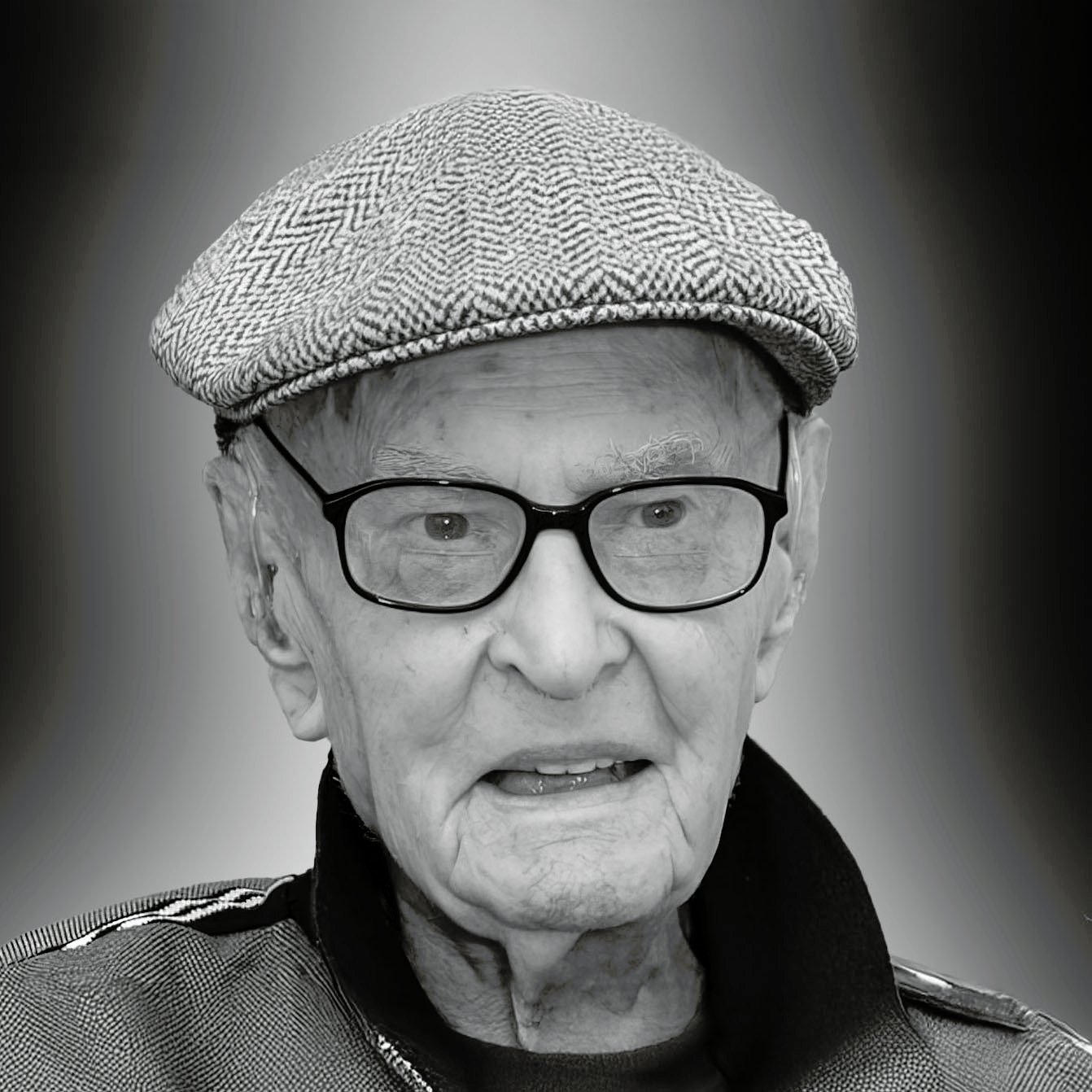
That curiosity deepened when I learned about Dexter Kruger, who became Australia’s oldest man before passing away in 2021 at the age of 111.
Dexter didn’t follow extreme diets. He didn’t biohack. He lived simply — growing vegetables, staying mentally curious, and remaining physically active well into his later years.
I approach longevity with curiosity, skepticism, and respect for evidence.
This project is not about miracle cures, immortality, or fear of aging.
It is about understanding what science tells us, what history shows us, and what real long-lived people actually did — not what marketing claims they did.
As I age myself, these questions feel increasingly personal.
Chasing Dexter is both an intellectual journey and a practical one — an attempt to live well now, while stacking the odds for health and independence later.
A Life Lived Differently
We are often fascinated by the secrets to a long and healthy life, searching for complex formulas in an ever-growing wellness market. Yet, the life of Dexter Kruger — a grazier, veterinary surgeon, poet, and author who became Australia’s oldest-ever man before his passing in 2021 — offers a masterclass in unconventional and refreshingly simple wisdom.
Early Life & Family
Dexter Ronald Kruger was born on 13 January 1910 in Nundah, Queensland, Australia, to Albert Heinrich “Henry” Kruger and Matilda Otto, a farming couple of German descent.
He and his five siblings grew up on the family property in Kilcoy, a small town in south-east Queensland, where he learned the rhythms of rural life and developed a lifelong connection to the land.
A Life On the Land
Dexter pursued a life deeply anchored in agriculture. He began selling cattle under his own name at age 16 and acquired his first farm in his twenties. A grazier and veterinary surgeon, he spent decades managing cattle across the rugged landscapes of Queensland.
He was known as a pioneer of the live-weight cattle selling system in Australia and worked his 5,300-hectare property near Roma until his mid-90s.
In 1942, he married Gladys Beanland, with whom he had a son, Greg Kruger. They were married for more than 50 years until her death in 1994.
Writing & Later Years
After his wife’s passing, Dexter embarked on a prolific literary chapter. Starting at age 86, he authored more than 300 stories collected in 12 books, including an autobiography titled The Life and Times of Dexter Kruger — published in May 2021 — the very month he set a national longevity record.
His work drew on decades of frontier experience, featuring bush humour, poetry, and reflections on life in rural Australia. His published collection was acquired by the State Library of Queensland, ensuring his voice remains part of Australia’s cultural record.
Longevity Milestones
Dexter Kruger lived a remarkably long and full life, marked by several official titles in Australian longevity records:
- Oldest living Australian man from 30 April 2017, until surpassed by Ken Weeks in October 2025.
- Oldest living Australian person from 29 December 2020.
- On 17 May 2021, at 111 years and 124 days, he surpassed World War I veteran Jack Lockett to become Australia’s oldest man ever recorded — a title he held until 12 April 2025.
He continued to live independently until age 103 before moving to an aged-care facility in Roma, Queensland.
Death and Legacy
Dexter Kruger passed away peacefully on 20 July 2021 at age 111 years and 188 days after a brief illness in Roma.
Lauded by local leaders and national media alike, he was celebrated not just for his longevity, but for the richness of his life experiences, his sharp wit, and his reflective wisdom on living with purpose.
What Defined His Longevity
Throughout interviews and media appearances later in life, Kruger attributed much of his long life to:
- A simple, nature-rooted lifestyle — living close to the land and eating food he grew.
- Consistent physical activity — daily routines and decades of farm work.
- Moderation, not restriction — enjoying food without excess.
- Purpose and curiosity — from managing livestock well into old age to writing books in his late 80s and beyond.
He Lived by a Simple, Powerful Mantra
When asked for a philosophy on how to live, Dexter didn’t offer a complex set of rules. Instead, he shared a straightforward and practical mantra for navigating life.
“Take it a day at a time and make the best of it.“
This focus on the present moment provides a clear and uncomplicated approach to building a long and contented life. Decades before it became a wellness trend, Dexter was practicing a form of mindfulness, finding peace and purpose, not in grand plans, but in the potential of each new day.
His Secret Superfood Was an Unlikely Delicacy
Dexter Kruger’s dietary philosophy was rooted in a profound connection to his environment. “I lived very close to nature and I ate mostly what I grew in the garden or the orchard or the farm,” he explained. This principle of self-sufficiency led him to a surprising dietary staple: chicken brains.
While modern health advice often focuses on exotic superfoods, Kruger found nourishment in a part of the chicken most people discard.
“Chicken brains. You know, chickens have a head. And in there, there’s a brain. And they are delicious little things. There’s only one little bite.”
Alongside this unusual delicacy, he also made a habit of eating half a dozen prawns every day. His approach stands in stark contrast to the complex and often restrictive diet trends of the modern era, reminding us that sustenance can be found in the simplest and most immediate of sources.
His Strongest Advice Was About Moderation, Not Restriction
When it came to direct dietary advice, Dexter’s wisdom was not about what to cut out, but rather about how much to consume. He offered a simple and powerful warning against the dangers of overeating.
“People do eat too much. They eat themselves into the grave.“
His son, Greg, confirmed that his father’s diet was not restrictive and included salt, sugar, and fat. However, this was balanced by a life of immense physical activity managing his 5,300-hectare cattle property, and the crucial fact that he never smoked and rarely drank. This underscores the timeless power of moderation and balancing intake with an active life.
He Redefined the Meaning of Retirement
Dexter challenged conventional notions of retirement by simply refusing to stop working. He continued to manage his sprawling cattle property until he was in his mid-90s, demonstrating a lifelong commitment to his work on the land.
After the death of his wife, Dexter, then 86, embarked on an entirely new career. With the help of his friend and typist, Janet Rowlings, he became a prolific author, ultimately publishing 12 books described as a “treasure trove of bush humour and a valuable insight into life on the land in the early 20th century.” His work was so valued that the Queensland Premier purchased his collection for permanent placement in the State Library of Queensland, cementing his legacy as a vital chronicler of Australian history.
A Life Lived Differently
Having lived through both world wars, numerous droughts, and 30 prime ministers, Dexter Kruger’s 111 years were defined by a simple bush lifestyle, an evolving sense of purpose, and wisdom that was as unconventional as it was profound. His story serves as a reminder that the secrets to a long life may not be found in complicated regimens, but in simple, daily practices.
What new passion could you discover today that might fuel you for decades to come?