
Articles and Research Documents
Episode 001
Episode 002
Episode 003
Episode 004
Episode 005
Episode 006
Research & Real-Life Stories
From genetics and metabolism to lifestyle and environment, researchers are steadily uncovering how human aging works — and how it might be influenced. Explore the science and anecdotes that are shaping a new perspective on human longevity.
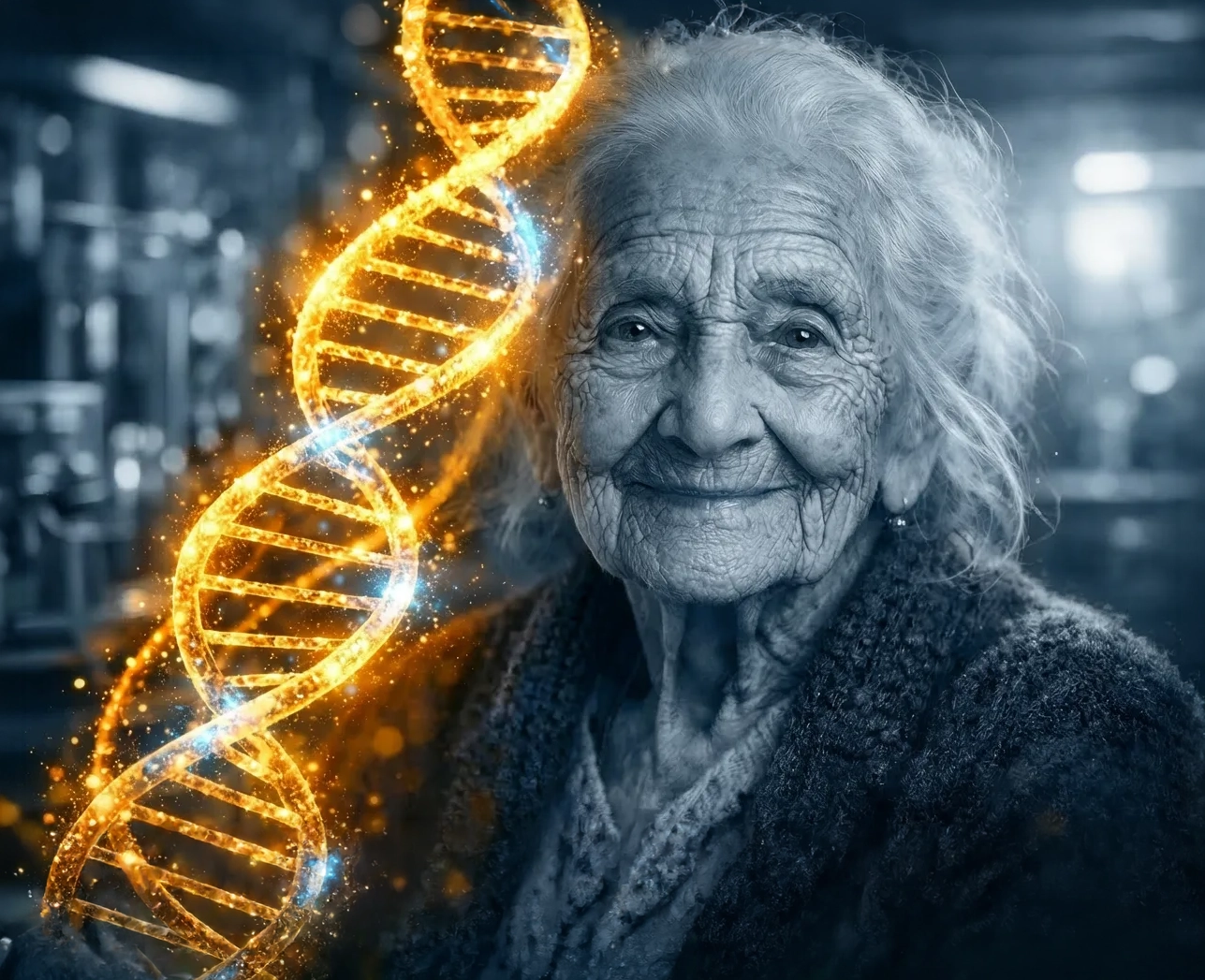
Inside the Science of Human Longevity
Longevity research isn’t built on guesswork or folklore. It comes from decades of work across biology, medicine, and population science — using models that range from cells and animals to long-lived human populations.
At Chasing Dexter, we focus on evidence drawn from:
Cellular and molecular biology
Epidemiological studies of long-lived populations
Metabolic and nutritional research
Exercise physiology and resilience studies
Long-term observational and cohort studies
The goal isn’t to promise immortality — it’s to understand how long, healthy lives are actually achieved.
Research is No Longer Confined to Observing Decline
Across disciplines — from genetics and cellular biology to nutrition, exercise physiology, and epidemiology — researchers are asking fundamental questions about why we age, why individuals age differently, and which factors appear to influence long-term health, resilience, and lifespan.
This section explores those questions through a careful reading of current research, historical data, and emerging hypotheses. Rather than chasing quick fixes or bold claims, the focus here is on understanding what the evidence actually suggests, where scientific consensus exists, where debate remains, and how new discoveries may gradually reshape our understanding of longevity and healthy aging.
The aim is not to offer prescriptions, but perspective — helping to make sense of a rapidly evolving field and what it may realistically mean for living longer, healthier, and more active lives.
This is an ongoing exploration — grounded in curiosity, guided by evidence, and open to revision as science advances.
Evidence Over Hype
The science of aging is complex, evolving, and sometimes uncomfortable. Not every popular idea stands up to scrutiny — and not every promising discovery translates into real-world benefit.
This section of the site is dedicated to:
What research actually shows
Where uncertainty still exists
How findings are often misinterpreted or overstated
Why individual context matters
You won’t discover miracle cures here — but you will find clarity.

Evidence Over Hype
The science of aging is complex, evolving, and sometimes uncomfortable. Not every popular idea stands up to scrutiny — and not every promising discovery translates into real-world benefit.
This section of the site is dedicated to:
What research actually shows
Where uncertainty still exists
How findings are often misinterpreted or overstated
Why individual context matters
You won’t discover miracle cures here — but you will find clarity.